




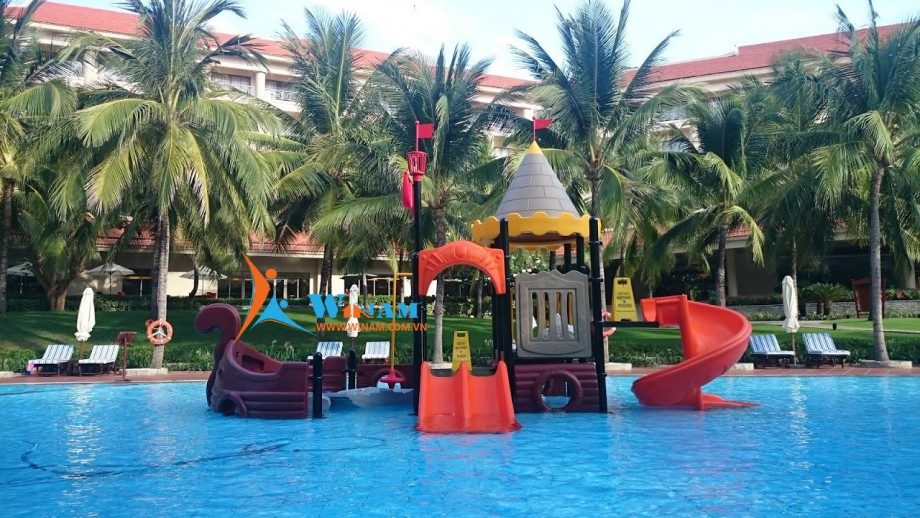
 Share
Splash Pads: Water System Design for Resorts
A resort splash pad is one of the highest-traffic amenity features on a tropical property, and one of the most frequently mis-specified. It looks simple from the outside: a flat deck, a few jets of water, a slide or two, and children playing. But what decides whether it performs for twenty years or fails in five is almost never the play structure. It is the water system underneath: the hydraulics, the nozzles, the filtration, the deck drainage and the surfacing. Get those right and the pad runs cheap, stays safe and looks good in the heat. Get them wrong and it becomes a slip-hazard liability guests stop using by the second season.
This article is written for resort developers, designers and procurement teams specifying a splash pad or water play area for a tropical or coastal site. It covers what a splash pad is and how it differs from a pool, how the water system is sized, how deck drainage and EPDM surfacing keep the feature safe, where it meets EN 1176, and what to write into a tender so the installed system matches the design. It is written for the buyer, not the vendor.
1. What a splash pad is and why resorts specify one
1.1 Splash pad, pool and water play are not the same thing
Three terms are used interchangeably in a resort design meeting, and they are not the same. A pool is a contained body of standing water with a defined depth, a lifeguard and a bather load. A water play structure is a built feature, often with slides, buckets and climbing elements, that may include a shallow pool or a dry deck. A splash pad is a dry, ground-level feature: water is sprayed or jetted onto a deck that drains away, and there is no standing water to fall into. That last property is the whole reason a resort specifies a splash pad in the first place: it is the lowest-supervision water feature available, it can be used by children who cannot swim, and it stays open through the hot hours when a pool deck is already crowded.
| Feature | Standing water | Supervision | Typical use window |
|---|---|---|---|
| Swimming pool | Yes, defined depth | Lifeguard required | Managed hours |
| Water play structure | Often, shallow | Attendant recommended | Daytime |
| Splash pad | No, dry deck | Minimal | Extended, including hot hours |
The distinction matters for the specification because each of the three has a different water system, a different drainage requirement and a different safety regime. A splash pad specification that borrows a pool’s pump room and a water play structure’s slide list, without rethinking the deck drainage, is the most common way these projects go wrong.
1.2 The operating case for a resort
In a tropical climate the pool is already doing its job in the morning and the evening. The midday hours, when the ambient temperature and the surface temperature of a hard deck are at their peak, are exactly the hours a pool deck is least comfortable. A splash pad converts those hours into usable amenity time: the water is the cooling, the deck is partly shaded, and the feature is used precisely when the rest of the pool area is empty. For a resort that sells the pool as a core amenity, the splash pad extends the usable window of the same water investment and spreads guest use across the day: the argument for treating it as a budget line, not an afterthought.
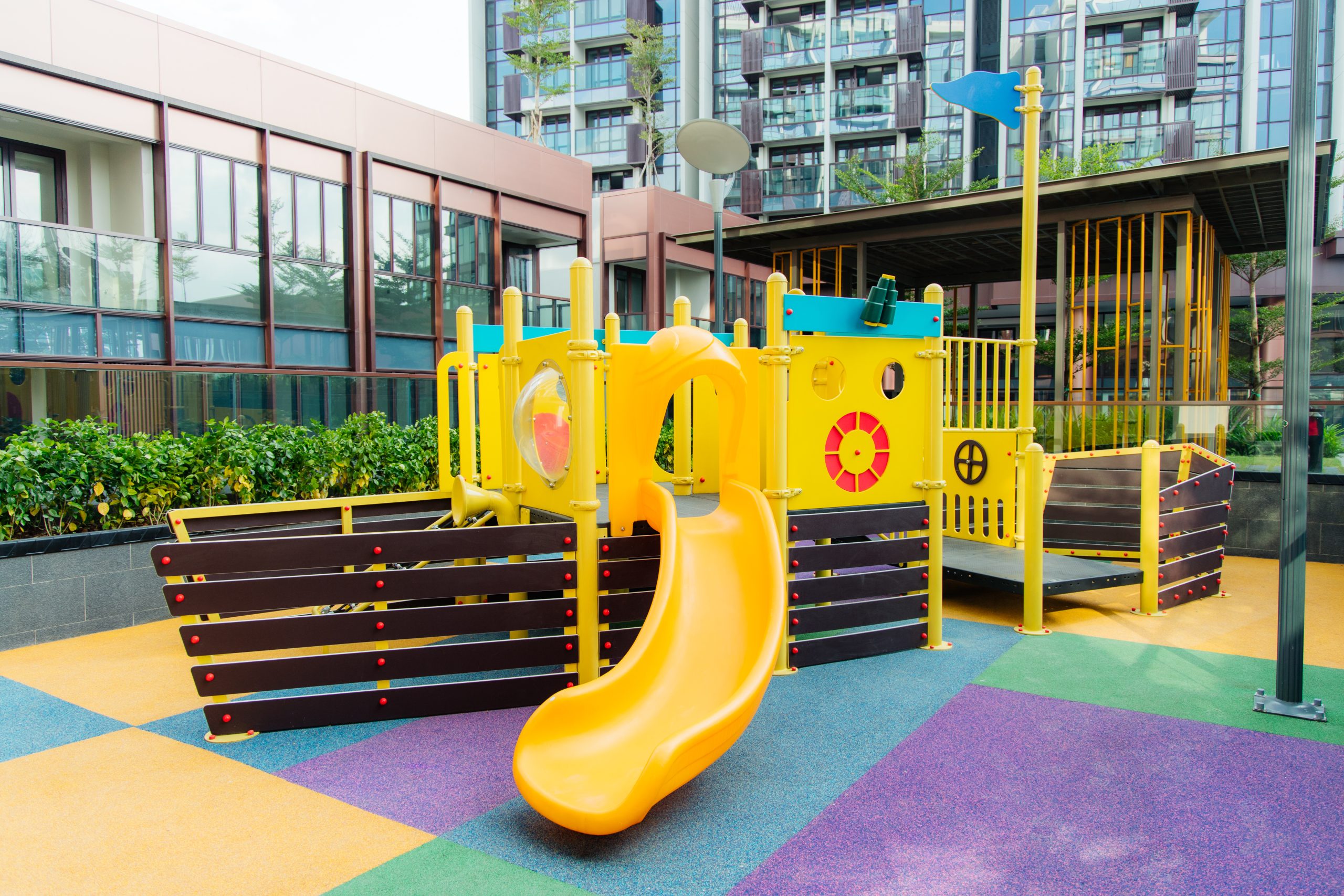
A play area on EPDM surfacing: the operating context for a splash pad.
2. The water system: the part buyers forget to specify
2.1 Hydraulic sizing
The water system is sized from the fixtures, not from the deck. Every nozzle, slide outlet, pour bucket and ground-level jet has a flow and a pressure requirement, and the total demand is the sum of the fixtures that can run at the same time, not every fixture on the pad. A pad sized for all fixtures running at once runs at half pressure and feels weak; one sized for the realistic concurrent set runs at the designed pressure and feels right. The design must state the concurrent use assumption explicitly, because it drives the pump, pipe and tank sizing, and it is the number most often left implicit in a tender. Three parameters belong in the specification: the design flow in litres per minute for the stated concurrent set; the design pressure at the farthest and highest fixture; and the head, the static plus friction loss, the pump must overcome. None is a vendor secret; they are the numbers a hydraulic calculation produces, and the numbers a buyer should ask for before award.
2.2 Nozzles and fixtures
The fixture list is where the character of the pad is decided. The options, with their realistic behaviour:
| Fixture | Behaviour | Best suited to |
|---|---|---|
| Ground-level pop-up jets | Low, gentle, wide coverage | Young children, entry zones |
| Overhead spray arms | Intermittent, high visibility | Central feature, photo moment |
| Pour buckets | Timed dump, high engagement | Interaction, older children |
| Slides, dry and wet | Directed flow, high impact | Core play, defined line |
Two practical notes. The fixture list should be drawn for the specific site, not taken from a catalogue: a pad sized for a flat deck behaves differently on a sloped one, and a coastal pad needs fixtures that tolerate salt. And the fixture list is the part of the specification easiest to change late, so it should be fixed first, before the hydraulic calculation is run against it.
2.3 Recirculation, filtration and backflow
A splash pad is a closed water loop, and the loop has to be specified as a whole. The water is drawn from a source, filtered, pumped through the fixtures, collected by the deck drainage, returned to a balancing tank and filtered again. The filtration rating, pump curve and tank size are all coupled, and specifying them separately is how a pad ends up with a pump too small for the filter, or a tank that cycles too fast to hold a clean volume. Backflow protection is the second half: a pad that draws from a potable source and returns treated water needs a certified backflow preventer sized for the loop, with the point of installation in the specification, not the as-built. In a tropical, high-use setting the water quality program, filter maintenance interval and disinfection method are operating costs, and should be priced as such in the tender.
3. Deck drainage and surfacing: where splash pads fail
3.1 Deck slope and drainage
The deck of a splash pad is a drainage surface, and it is the surface that decides whether the feature is safe. Water sprayed onto the deck has to leave it fast enough that it does not pool at the base of a fixture or the edge of a slide, and the only way to guarantee that is a deck sloped to a defined drain line, sized for the concurrent flow. A flat deck, or one sloped to an undersized drain, will pool water exactly where a child is standing, in the hot hours when the pad is busiest. The slope, the drain line location and the drain capacity are a set, and they belong in the specification together, on the same drawing as the fixture layout.
3.2 EPDM surfacing and slip resistance
The surfacing of a splash pad is not a finish, it is a safety system. A wet, hard deck is a slip hazard, and the surfacing has to be chosen for the wet condition, not the dry one. Poured-in-place or tiled EPDM is the standard answer for a splash pad deck: it is resilient underfoot, it drains through its own texture, it tolerates the UV and the salt of a tropical coastal site, and it can be detailed to the deck slope without a separate drainage layer. The specification should name the EPDM system, the colour and the wet-state slip resistance, and the interface detail where the surfacing meets the drain line and the fixture bases. The surfacing side of that decision is covered in the EPDM specification article.
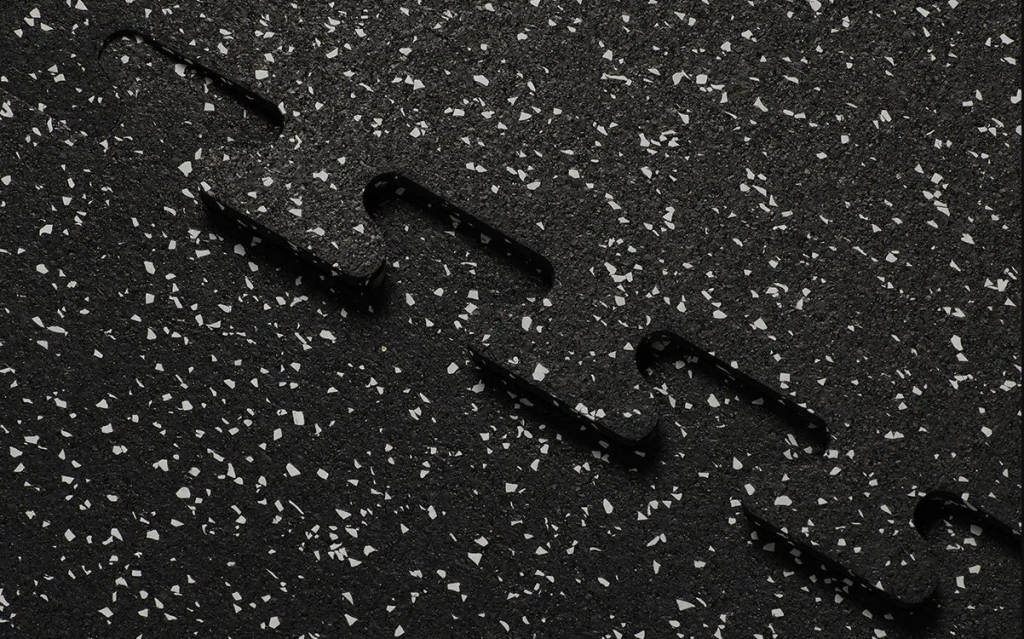
Poured-in-place EPDM: the surfacing that keeps a splash pad deck safe when wet.
4. Safety: where a splash pad meets EN 1176
When the splash pad is a free-standing amenity on a resort deck, the general site rules govern it. When it is a defined play feature with a play surface, the playground rules apply as well, because the pad is a piece of play equipment under EN 1176. The checks that apply are the same family as any playground feature:
- Entrapment at the fixture bases. The gap between a pop-up jet and the deck, and the gap at the base of a slide, must not form a shape a child’s head or torso can pass into and not out of. The fixture base detail is part of the safety design, not a finishing detail.
- Sharp edges and points. The edge of a deck trim, the end of a spray arm or a loose fitting at a height a child can reach is subject to the same edge and point rules as the play equipment.
- Ball traps and pinch points. A moving part, a timed bucket or a swinging spray arm has to be detailed so a hand or a finger cannot be trapped between it and the deck or a fixture.
- Water jet height and force. A jet that is too high or too forceful for the age band it serves is a hazard in itself; the jet height and impact pressure belong in the specification, matched to the age band the pad is designed for.
- Clearance and the fall zone. The space under a slide or an overhead feature has to keep the required clearance, and a deck leg or a drain grate in the fall zone must not reduce it.
The full handover document set, including how the pad interacts with the surfacing requirements of EN 1177, is covered in the article on the EN 1176 and EN 1177 compliance baseline.
5. Tropical and coastal operations
A splash pad in a tropical or coastal setting has three loads a temperate pad does not. The first is heat: the deck and the water both run hot, and the feature has to be designed for the hot hours, not the average day. The second is UV: the EPDM, the plastics and the seals all degrade under UV, and the specification has to name the UV-stabilised materials. The third is salt: a coastal pad is a salt environment, and the fixtures, fasteners and filtration have to be specified for the salt load, or the maintenance interval will be measured in months, not years. Typhoon season adds a fourth load, the wind and the debris. These are not vendor options; they are the climate, and they belong in the specification as named requirements. The shade side of that decision is covered in the playground shade structures article.
6. What to write into the tender
A useful minimum list for the splash pad part of a resort tender:
- Fixture list for the specific site, with the age band and the concurrent use assumption stated.
- Hydraulic calculation: design flow, design pressure at the farthest fixture, and the head, for the stated concurrent set.
- Filtration rating, pump curve and balancing tank size, specified as a coupled set.
- Certified backflow preventer, sized for the loop, with the point of installation named.
- Deck slope, drain line location and drain capacity, on the same drawing as the fixture layout.
- EPDM surfacing system, colour and wet-state slip resistance, with the interface detail at the drain line and the fixture bases.
- EN 1176 compliance statement where the pad is a defined play feature, with the entrapment, edge and clearance checks documented.
- Water quality program and warranty period, including the fixtures, the fasteners, the EPDM and the filtration.
Each item has a document that can be requested before award. A splash pad that is cheap to build and hard to specify is a splash pad that will be expensive to own.
7. Maintenance and water quality
A splash pad that is maintained from handover stays safe and useful for its design life; one that is never inspected loses its safety at the fixtures and the drain line before it loses it anywhere visible. An indicative cycle:
| Inspection | Frequency | Main focus |
|---|---|---|
| Visual | Weekly to monthly | Debris, blocked jets, deck pooling, slip condition |
| Operational | One to three months | Nozzle pattern, fixture bases, drain line, filter |
| Annual main inspection | Twelve months | Full hydraulic and filtration assessment, photographed for the record, EPDM and seal condition |
The service life of the fixtures, the EPDM and the filtration are different, and the replacement plan should reflect that: the nozzles and the seals come out first, the deck and the pump usually stay. If the EPDM is specified at a service life, the budget should carry a replacement line at that horizon, and the annual inspection shows when the surfacing is reaching the end of that window.
8. Where WINAM comes in
With over 1,000 projects delivered since 2013, WINAM supplies and installs water play and splash pad features as part of the same package as the play equipment and the surfacing, so the water system is designed, calculated and installed on the same drawing set as the rest of the area, with the same handover document set. WINAM has delivered water play features for resort properties in Vietnam, including a pool water play structure at Vinpearl Resort Nha Trang.
- Outdoor playground equipment, including water play structures, specified together with the water system.
- Safety flooring, including EPDM, with the colour and the drainage chosen together with the fixture layout.
- Turnkey services covering design review, hydraulic calculation, supply, installation and maintenance.
- Browse delivered projects across residential developments, schools and resorts.
The company management system is certified to ISO 9001:2015, ISO 14001:2015 and ISO 45001:2018.
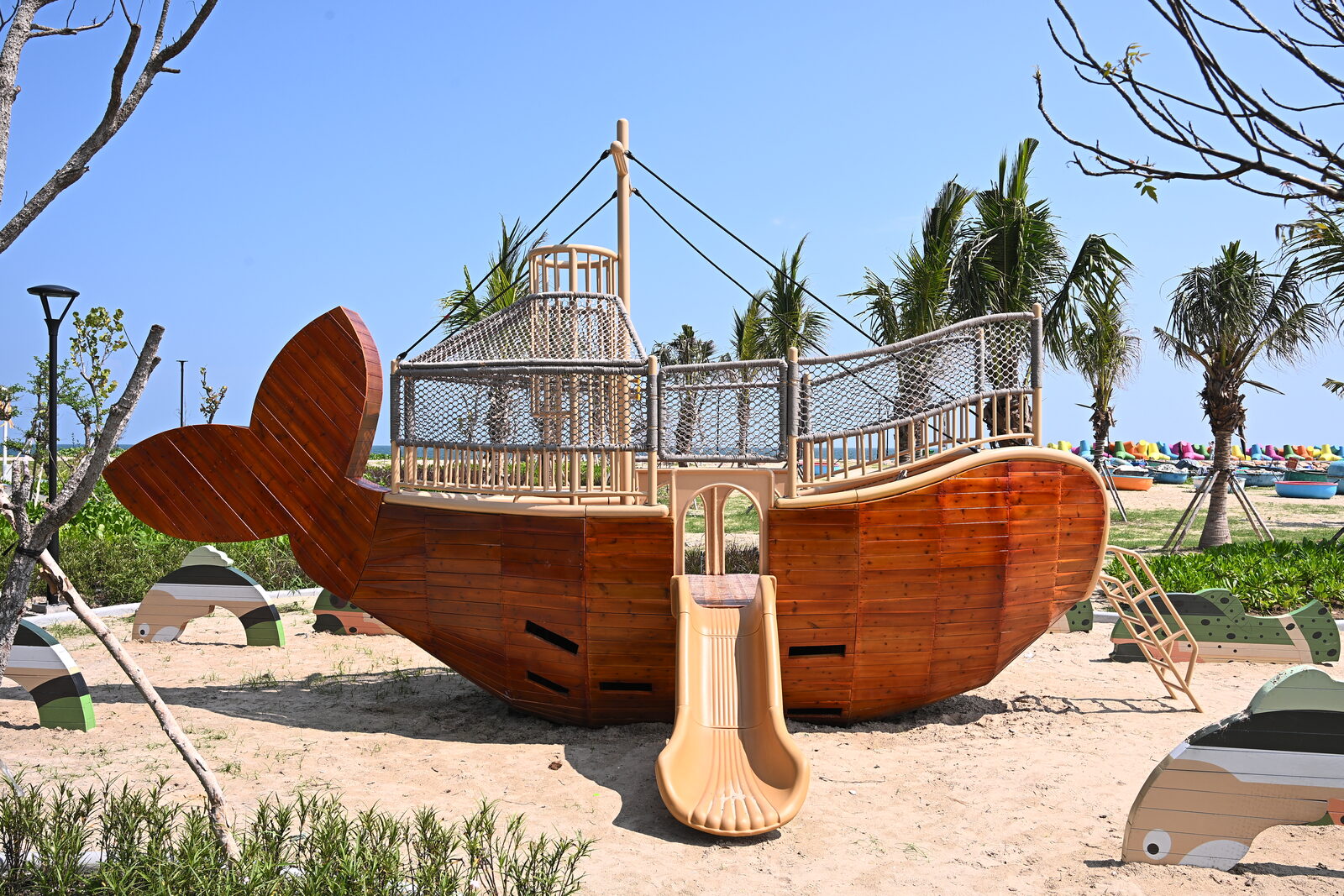
Marine-themed playground structure at Bai Da Ong Dia Park, Phan Thiet.
Talk to our team
If you are preparing a design package or a tender for a resort splash pad or a water play area, the WINAM technical team can review your fixture list and the hydraulic documents free of charge.
- Hotline: (+84) 9 6161 0202 or (+84) 9 31 176 176
- Email: [email protected]
- Office: 226/4A Le Trong Tan, Tay Thanh Ward, Ho Chi Minh City
- Send an enquiry online